Māori Data Governance for AI Systems
Embed Treaty of Waitangi obligations and Māori data sovereignty principles into your AI governance framework. Constitutional obligations aren't optional.
Most AI governance frameworks come from Sydney, London, or San Francisco. They ignore New Zealand's bicultural foundations completely. We help organisations honour Treaty obligations through practical frameworks that integrate mana, kaitiakitanga, and te ao Māori perspectives into AI decision-making.
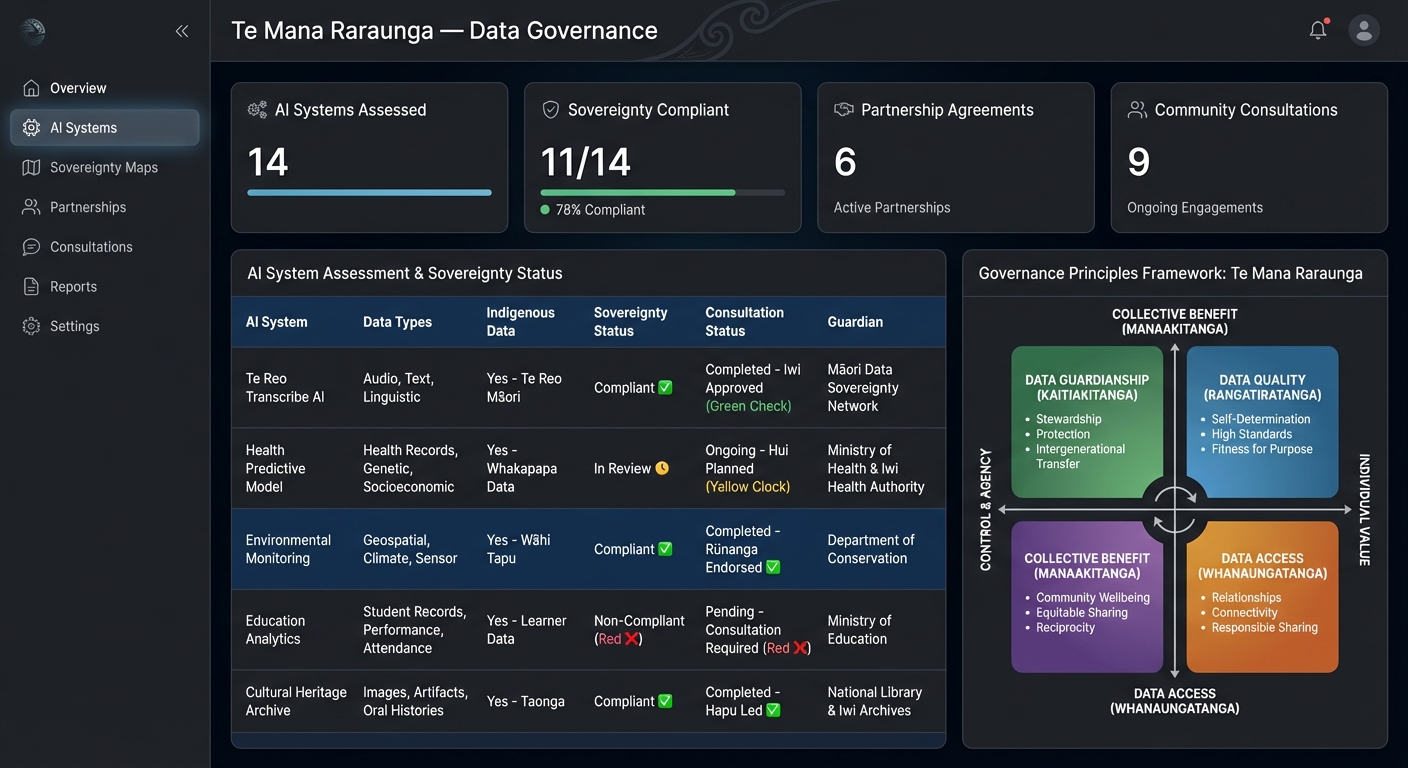
The Gap Most Organisations Don't Know They Have
Your organisation has probably deployed AI systems that process data about Māori communities, make decisions affecting Māori stakeholders, or operate where Treaty obligations apply. When was the last time your AI procurement included cultural impact assessment?
Treaty Obligations Ignored
Most AI governance frameworks are built in Sydney, London, or San Francisco. They provide no guidance on Treaty of Waitangi obligations, Māori data sovereignty, or te ao Māori perspectives in AI ethics.
No Framework for Cultural Impact
You can assess AI for privacy risk, security risk, operational risk. But can you assess for cultural harm? For impacts on mana whenua? For violations of kaitiakitanga principles? Without frameworks grounded in te ao Māori, you can't.
Consultation Without Structure
The Treaty requires partnership, active protection, and equity. But how do you put that into practice in AI decisions? Most organisations want to do the right thing. They just have no structured approach.
How We Embed Māori Data Governance in AI Frameworks
We work with Māori data governance experts and iwi advisors to build frameworks that reflect te ao Māori principles while integrating with your existing risk and compliance structures.
Identify Māori Data and Impacts
We start by understanding where your AI systems intersect with Māori data and communities: Which systems process information about Māori individuals or communities? Where do AI decisions affect Māori stakeholders disproportionately? What data has cultural significance or contains whakapapa information?
Deliverable: Māori data mapping and impact inventory
Embed Treaty Principles in Governance
We integrate the three Treaty principles: Partnership (Kotahitanga), Active Protection (Tiakitanga), and Equity (Ōritetanga). This includes involving Māori stakeholders in AI decisions, safeguarding data sovereignty, and testing for algorithmic bias against Māori populations.
Deliverable: Treaty-aligned AI governance principles and decision framework
Build Culturally Grounded Risk Assessment
We create assessment methodologies that evaluate AI through a te ao Māori lens: Mana (authority and prestige), Kaitiakitanga (guardianship), and Whakapapa (relationships and context). Does this AI system respect mana? Are we acting as responsible guardians? Have we considered collective rights?
Deliverable: Cultural impact assessment methodology and templates
Set Up Consultation and Accountability
We help you turn partnership into structured processes: when and how to engage iwi, consultation protocols, decision rights for cultural concerns, and ongoing monitoring with Māori stakeholders.
Deliverable: Consultation framework and accountability protocols
Who Needs Māori Data Governance
Government Agencies and Crown Entities
Central and local government organisations have explicit Treaty obligations. If you're deploying AI that affects Māori communities, handles Māori data, or operates in areas where Treaty principles apply - you need this framework.
Examples: Government ministries, local councils, Te Whatu Ora, education providers, social services
Healthcare Organisations
Health data about Māori communities requires particular care under both Health Information Privacy Code and Treaty obligations. AI in healthcare must consider health equity and cultural safety.
Examples: Te Whatu Ora, private hospitals, primary care networks, aged care providers, mental health services
Organisations Handling Māori Data
Any organisation processing information about Māori individuals or communities - whether through surveys, service delivery, research, or commercial operations - has responsibilities around data sovereignty.
Examples: Research organisations, social service providers, educational institutions
Government Contractors
Technology vendors and consultancies selling AI systems to government agencies need to demonstrate Treaty-aligned governance to win and retain contracts.
Examples: SaaS providers, AI platform vendors, consultancies, system integrators
Ready to Honour Treaty Obligations in AI Governance?
Schedule a consultation to discuss how we can help your organisation integrate Māori data governance into your AI frameworks - with the cultural competency and respect this work requires.
Confidential discussion. Culturally grounded expertise. New Zealand-specific knowledge.