ISO 42001 Certification
Achieve ISO/IEC 42001:2023 certification - the world's first international standard for AI management systems. Demonstrate responsible AI governance to stakeholders and regulators.
We guide Australian organisations through the full certification journey: gap analysis, implementation, documentation, and certification body preparation.
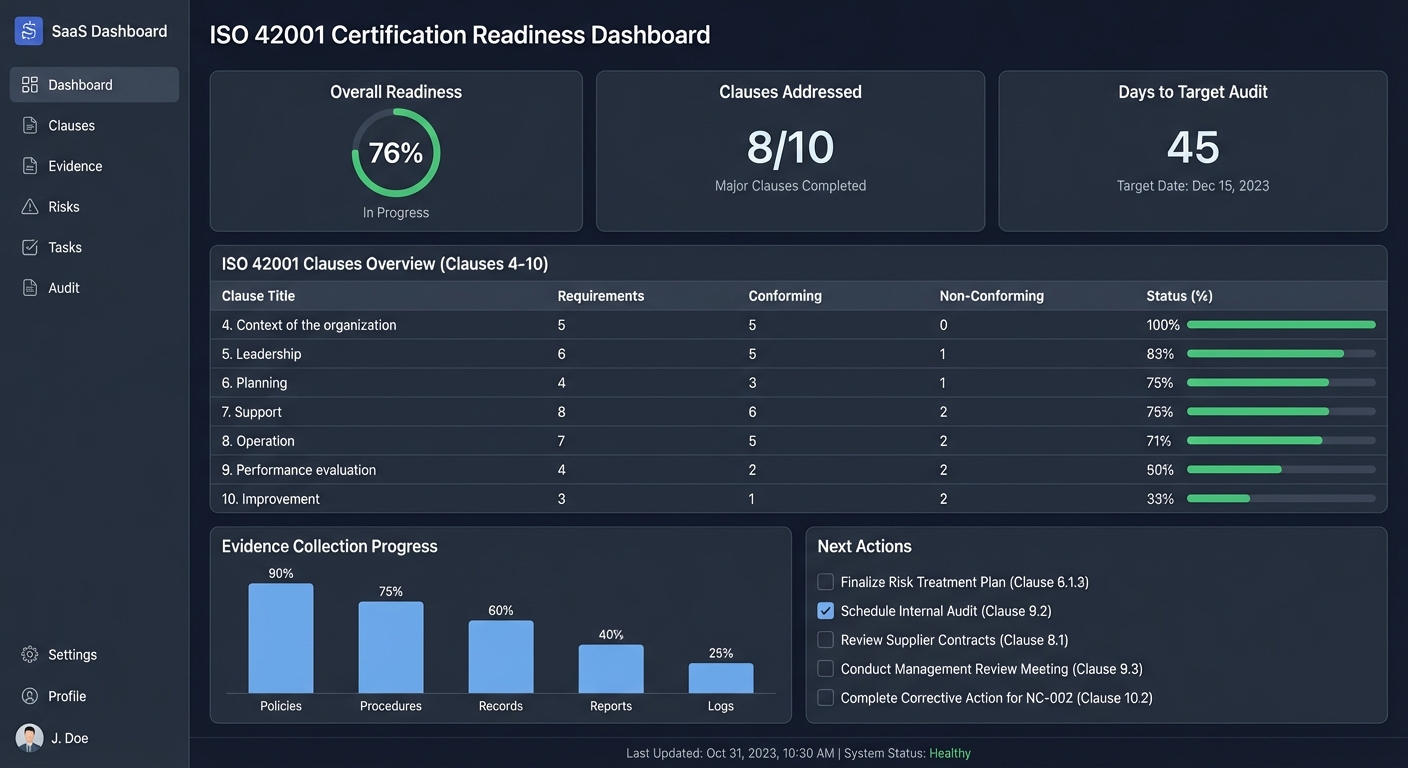
What is ISO 42001?
ISO/IEC 42001:2023 is the first international standard providing requirements for establishing, implementing, and improving an AI management system (AIMS).
The Standard Covers:
AI Policy and Objectives
Establishing organisational commitment to responsible AI and defining measurable objectives.
Risk Assessment
Systematic identification and treatment of AI-related risks across the AI lifecycle.
Impact Assessment
Evaluating potential impacts of AI systems on individuals, groups, and society.
AI System Lifecycle
Controls for design, development, deployment, operation, and retirement of AI systems.
Third-Party Management
Requirements for managing AI components and services from external providers.
Performance Evaluation
Monitoring, measurement, analysis, and internal audit of the AI management system.
Why Certify?
Demonstrate Commitment
Show customers, partners, and regulators that you take AI governance seriously with independently verified certification.
Competitive Advantage
Early certification positions you ahead of competitors. KPMG became the first firm globally to achieve ISO 42001 in October 2024.
Regulatory Alignment
ISO 42001 aligns with Australia's Voluntary AI Safety Standard and provides a foundation for EU AI Act compliance.
Customer and Partner Requirements
Enterprise customers increasingly require AI governance assurance from suppliers. Certification provides evidence.
Continuous Improvement
The management system approach embeds ongoing improvement into your AI governance processes.
Certification Journey
We guide you through every phase of ISO 42001 implementation and certification, from initial gap assessment to successful audit completion.
Certification Bodies in Australia
ISO 42001 certification is provided by accredited certification bodies including:
- BSI (British Standards Institution)
- DNV
- SAI Global
- Bureau Veritas
We help you select the right certification body and prepare for their audit process.
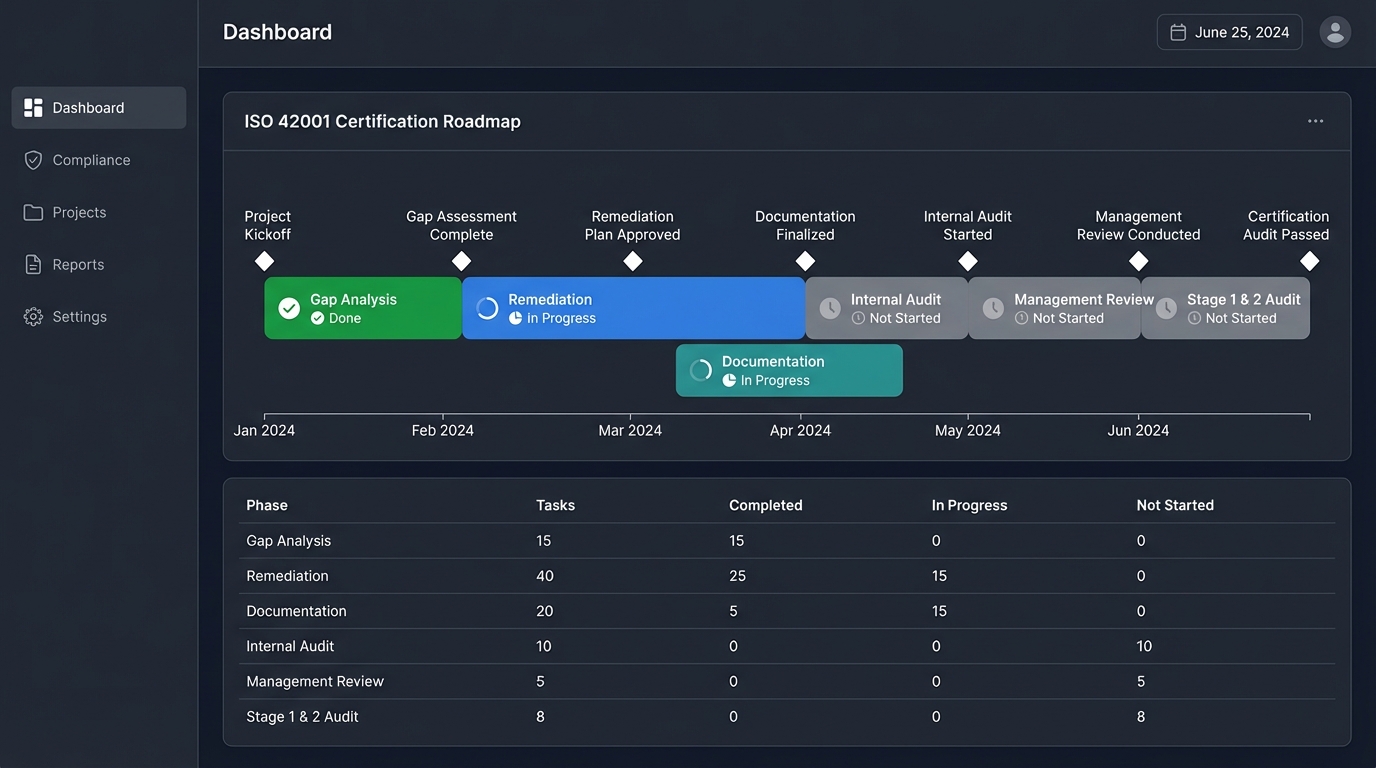
Readiness Assessment
We assess your current AI governance maturity against ISO 42001 requirements, identifying gaps and estimating the effort required for certification.
Scope Definition
We help you define the scope of your AI management system: which AI systems, processes, and organisational units will be covered by certification.
AIMS Implementation
We develop and implement the required management system components: policies, risk assessment processes, controls, documentation, and monitoring mechanisms.
Documentation Development
We create the mandatory documentation including AI policy, risk assessment records, control documentation, and evidence of management system operation.
Internal Audit
We conduct internal audits to verify the management system is operating effectively and identify any issues before the certification audit.
Certification Audit Support
We prepare your team for the Stage 1 (documentation review) and Stage 2 (implementation audit) certification audits, and support any non-conformance resolution.
What You Receive
Complete AIMS implementation support and certification preparation.
Gap Assessment Report
Detailed analysis of current state against ISO 42001 requirements with gap severity ratings and remediation recommendations.
AIMS Documentation
Complete set of management system documentation: AI policy, procedures, risk registers, control documentation, and records templates.
Risk Assessment Framework
ISO 42001-compliant risk assessment methodology, risk register templates, and impact assessment procedures.
Control Framework
Implementation of Annex B controls covering AI system lifecycle, data management, and third-party management.
Implementation Roadmap
Phased implementation plan with milestones, resource requirements, and timeline to certification.
Audit Preparation
Internal audit program, audit checklists, team preparation, and support throughout the certification audit process.
Frequently Asked Questions
How long does ISO 42001 certification take?
Typical implementation takes 6-12 months depending on your starting maturity, scope, and resource availability. Organisations with existing ISO management systems (like 27001) may certify faster.
Do we need existing ISO certifications first?
No. ISO 42001 can be implemented as a standalone management system. However, organisations with ISO 27001 (information security) or ISO 9001 (quality) often find integration easier due to the common management system structure.
What's the scope of certification?
Scope can cover your entire organisation or specific AI systems, business units, or processes. We help you define a scope that makes sense for your business objectives and demonstrates meaningful AI governance.
How does ISO 42001 relate to Australian regulations?
ISO 42001 aligns well with Australia's Voluntary AI Safety Standard and provides a structured approach to meeting APRA, ASIC, and Privacy Act requirements. Certification demonstrates commitment to responsible AI governance.
What ongoing requirements are there after certification?
Certification requires annual surveillance audits and recertification every three years. You'll need to maintain the management system, conduct internal audits, and demonstrate continuous improvement.
Related Services
AI Governance Consulting
Comprehensive governance program design that forms the foundation for ISO 42001 certification.
Learn more →Risk Framework Development
AI risk frameworks aligned to ISO 42001 risk assessment requirements.
Learn more →AI Audit & Assessment
Gap assessment against ISO 42001 requirements to understand certification readiness.
Learn more →Start Your ISO 42001 Journey
Schedule a consultation to discuss your ISO 42001 certification goals and understand the pathway to becoming one of Australia's certified AI-responsible organisations.