AI Capability Building for Australian Organisations
Organisations are implementing AI technologies while navigating new regulatory requirements. Training programs need to address practical capability building alongside compliance obligations.
We design training programs that address Australian regulatory frameworks (OAIC guidance on explainability, Privacy Act automated decision-making requirements, and Australia's AI Ethics Principles) alongside practical AI skill development across four capability levels.
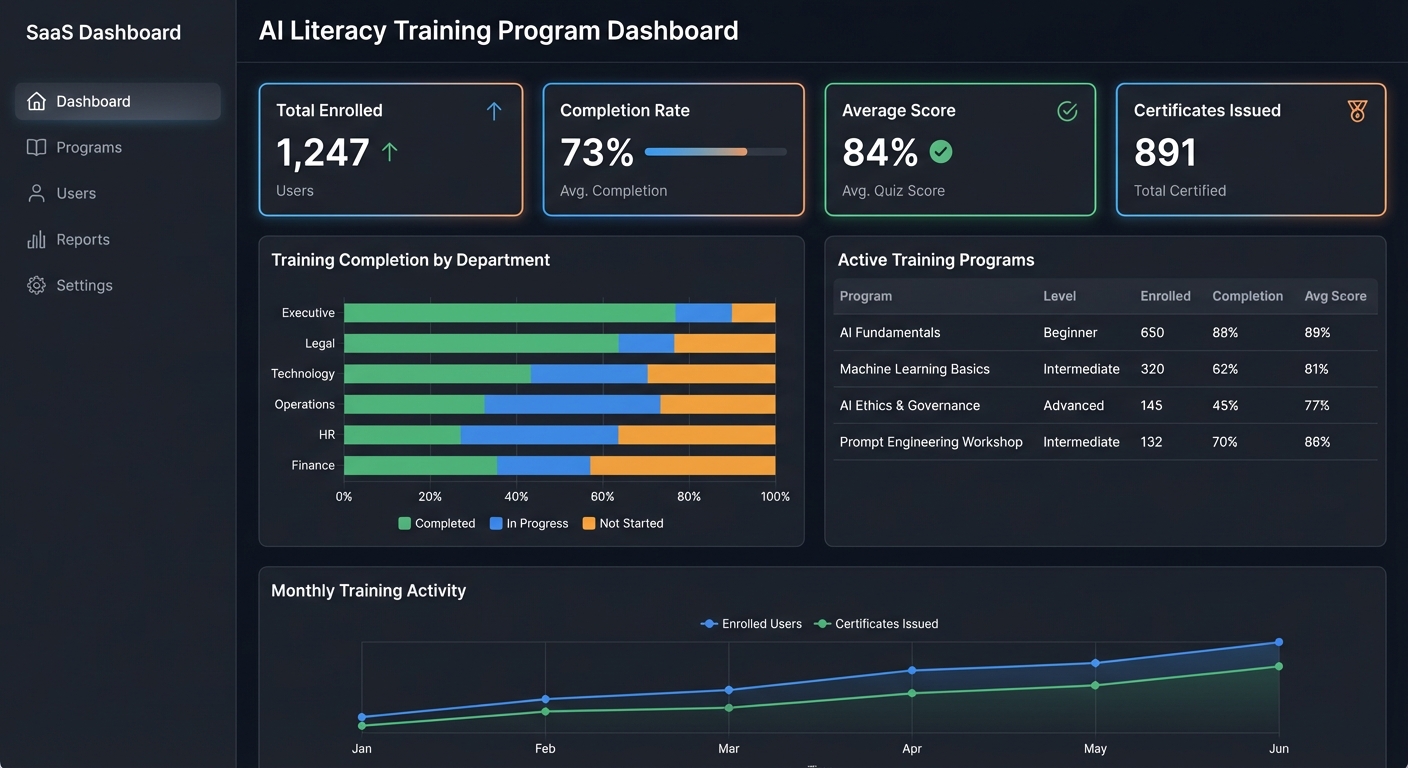
The AI Training Landscape in Australia
Organisations face new training requirements under Australian Government AI policy, while employees need practical skills to use AI tools effectively within governance boundaries.
Key considerations for AI training programs:
- Australian Public Service agencies must provide AI fundamentals training to all staff by June 2026 under the Policy for Responsible Use of AI
- OAIC guidance requires organisations to ensure staff can provide meaningful explanations of AI outputs to affected individuals
- Privacy Act amendments taking effect December 2026 require organisations to update privacy policies for automated decision-making systems
- Different organizational roles require different levels of AI capability, from foundational awareness to strategic governance oversight
Training programs need to address regulatory compliance requirements alongside practical skill development, with content appropriate for different organizational roles.
Government Training Requirements
The Policy for Responsible Use of AI in Government (effective December 2025) mandates AI fundamentals training for all Australian Public Service staff. Training must cover identifying AI types, applying ethics principles, and managing AI for accuracy, bias, and transparency.
Privacy and Explainability Obligations
OAIC guidance requires organisations to ensure AI system outputs and decisions can be explained to affected individuals. Staff must be trained to provide meaningful explanations despite the technical complexity of AI systems. Privacy Act amendments (10 December 2026) introduce new automated decision-making transparency requirements.
Voluntary Frameworks and Best Practices
Australia's Voluntary AI Safety Standard provides 10 guardrails for responsible AI deployment, including governance, risk management, human oversight, and transparency requirements. Australia's AI Ethics Principles cover wellbeing, fairness, privacy, transparency, contestability, and accountability—providing guidance for training program design.
Training Programs Aligned with Australian Regulatory Frameworks
Our training programs integrate Australian regulatory requirements with practical AI skill development, addressing compliance obligations alongside capability building across different organizational roles.
Regulatory Framework Integration
Training content integrates OAIC guidance on AI explainability, Privacy Act requirements for automated decision-making, and Australia's 8 AI Ethics Principles (human wellbeing, fairness, privacy, transparency, reliability, contestability, and accountability).
Role-Appropriate Pathways
Four training levels from awareness to leadership ensure everyone gets the skills they need. Executives receive strategic AI literacy. Practitioners gain hands-on capability. Technical teams develop implementation expertise.
Sector-Specific Compliance
For regulated sectors, training programs can address sector-specific requirements—APRA information security obligations for financial services, ASIC expectations on AI governance, or industry-specific privacy considerations—alongside general regulatory frameworks.
Four-Level AI Capability Framework
Role-appropriate training pathways from foundational awareness to strategic leadership.
AI Awareness (All Employees)
Foundational understanding for all staff regardless of role. Meets Australian Government requirement for AI fundamentals training.
- What is AI and how does it work
- Australia's AI Ethics Principles
- Privacy and security awareness
- Organisational policies and guidelines
Delivery: Self-paced, virtual, or in-person
AI Practitioner (Regular Users)
Hands-on training for employees using AI tools regularly. Develop practical skills for immediate workplace application.
- Prompt engineering fundamentals
- Tool-specific training (ChatGPT, Copilot, Claude)
- Quality assurance for AI outputs
- Workflow integration and automation
Delivery: Hands-on workshops (virtual or in-person)
AI Specialist (Technical Roles)
Advanced training for IT professionals, data teams, and technical staff responsible for AI implementation and management.
- AI architecture and evaluation
- Implementation and integration best practices
- Security and risk management
- ISO/IEC 42001 AI Management System
Delivery: Intensive programmes or project-based learning
AI Leadership (Executives & Boards)
Strategic AI literacy for C-suite executives and board members to enable informed decision-making and governance oversight.
- AI strategic landscape and opportunities
- Governance frameworks and accountability
- Risk assessment and investment decision-making
- Regulatory environment and compliance
Delivery: Executive sessions, board briefings, advisory
Our Training Approach
Training programs are tailored to your industry context, regulatory requirements, and organizational AI tool usage. Programs can be delivered through multiple formats to suit different learning preferences and organizational constraints.
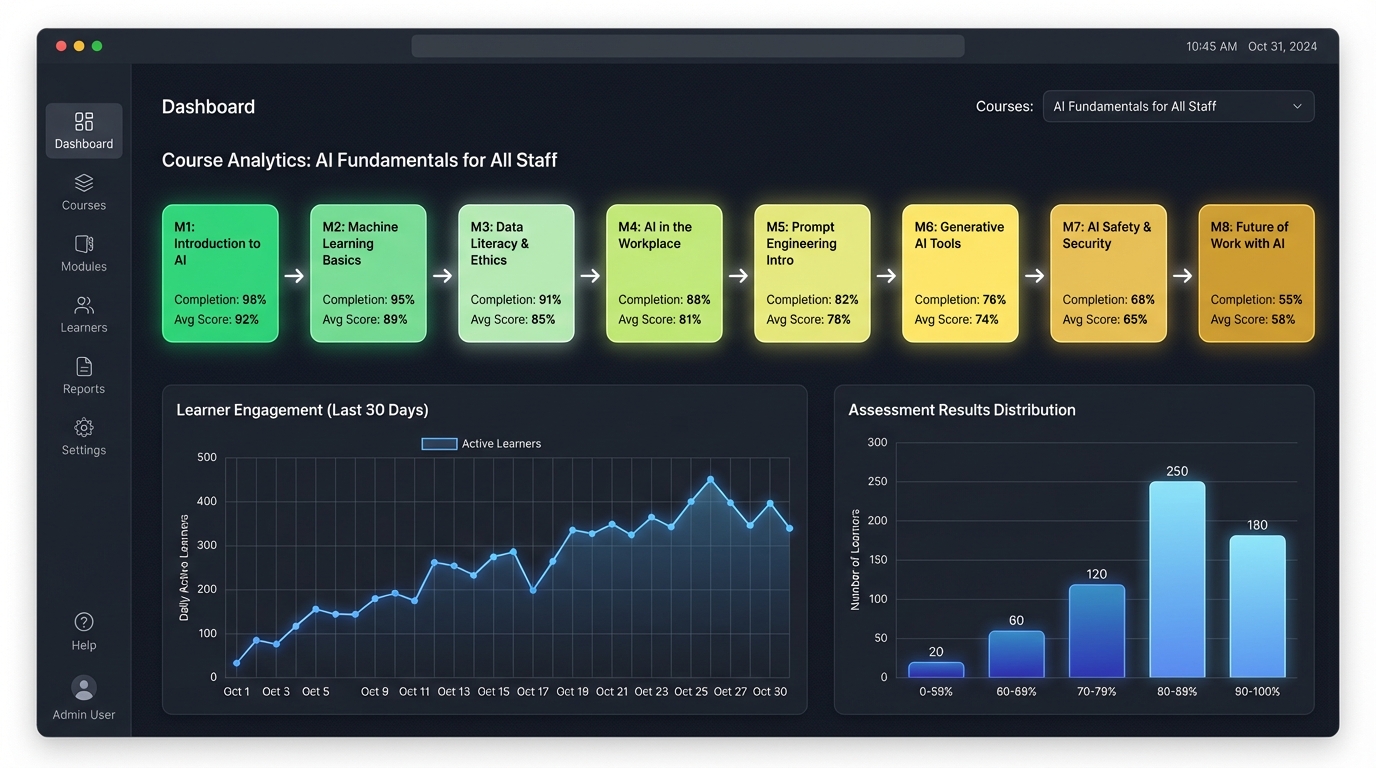
Training Needs Assessment
We evaluate your current AI capability, regulatory requirements, approved tools, and business objectives. You receive a tailored training strategy with role-based pathways and delivery recommendations.
Curriculum Customisation
Training content is adapted to your industry context, use cases, and policies. We integrate your organisational AI guidelines, approved tools, and sector-specific compliance requirements into every module.
Programme Delivery
Flexible delivery through in-person workshops, live virtual sessions, self-paced e-learning, or blended approaches. Hands-on exercises use real work examples relevant to each role.
Measurement & Reporting
Track completion rates, competency assessments, and compliance adherence. Regular reporting provides visibility into training progress and identifies areas where additional support or reinforcement may be needed.
What AI Training Programs Should Address
Practical Skills Development
- Prompt engineering techniques for common business tasks
- Quality assurance methods for identifying AI output errors and biases
- Tool-specific training for organizational AI platforms
- Workflow integration approaches for different business functions
Regulatory Compliance Coverage
- Australian Government AI training mandate requirements
- Privacy Act obligations for AI system usage
- OAIC explainability and transparency expectations
- Automated decision-making reforms (December 2026)
Governance Framework Understanding
- Australia's 8 AI Ethics Principles application
- Voluntary AI Safety Standard 10 guardrails
- Human oversight and contestability requirements
- Risk management and accountability frameworks
Role-Specific Learning Paths
- Foundational awareness for all employees (30 mins - 2 hours)
- Practitioner skills for regular AI tool users (half to full day)
- Technical specialist training for implementation teams (2-5 days)
- Strategic leadership programs for executives and boards (2-8 hours)
Common Questions
How long does AI training take?
Foundation awareness training takes just 30 minutes. Practitioner programmes range from half-day to full-day sessions. Executive programmes are typically 2-4 hours. Enterprise transformation programmes run 3-12 months depending on organisation size and scope.
Do you customise training for our industry?
Yes. We tailor all training to your sector's regulatory requirements, approved AI tools, and specific use cases. We've developed programmes for government, financial services, healthcare, and professional services with industry-specific examples and compliance integration.
What AI tools do you train on?
We train on the tools your organisation uses or plans to use, including ChatGPT, Microsoft Copilot, Claude, and sector-specific AI applications. We also help you select appropriate tools as part of our advisory service.
How do you measure training effectiveness?
We track completion rates, knowledge assessment scores, and compliance adherence. Regular reporting provides visibility into training progress and competency development across different organizational roles.
Can you help us build internal training capability?
Yes. Our train-the-trainer programmes equip your L&D team to deliver ongoing AI training independently. We also provide content licensing for integration into your LMS, ensuring sustainable capability.
Does this meet Government AI training requirements?
Yes. Our foundation awareness programme meets the Australian Government Policy requirement for AI fundamentals training for all staff. Content aligns with Australia's AI Ethics Principles and OAIC guidance on privacy and AI.
Related Services
AI Governance Consulting
Build comprehensive AI governance frameworks that integrate with your training programmes.
Learn more →AI Impact Assessment
Independent assessment of AI systems and governance aligned to ASIC and APRA requirements.
Learn more →Regulatory Compliance
Navigate overlapping AI compliance requirements across OAIC, APRA, ASIC, and sector regulations.
Learn more →Discuss Your AI Training Requirements
Training programs can be tailored to your organizational context, regulatory obligations, and approved AI tools. Contact us to discuss how training can address your specific compliance and capability building needs.
Tailored programs | Multiple delivery formats | Australian regulatory framework integration